
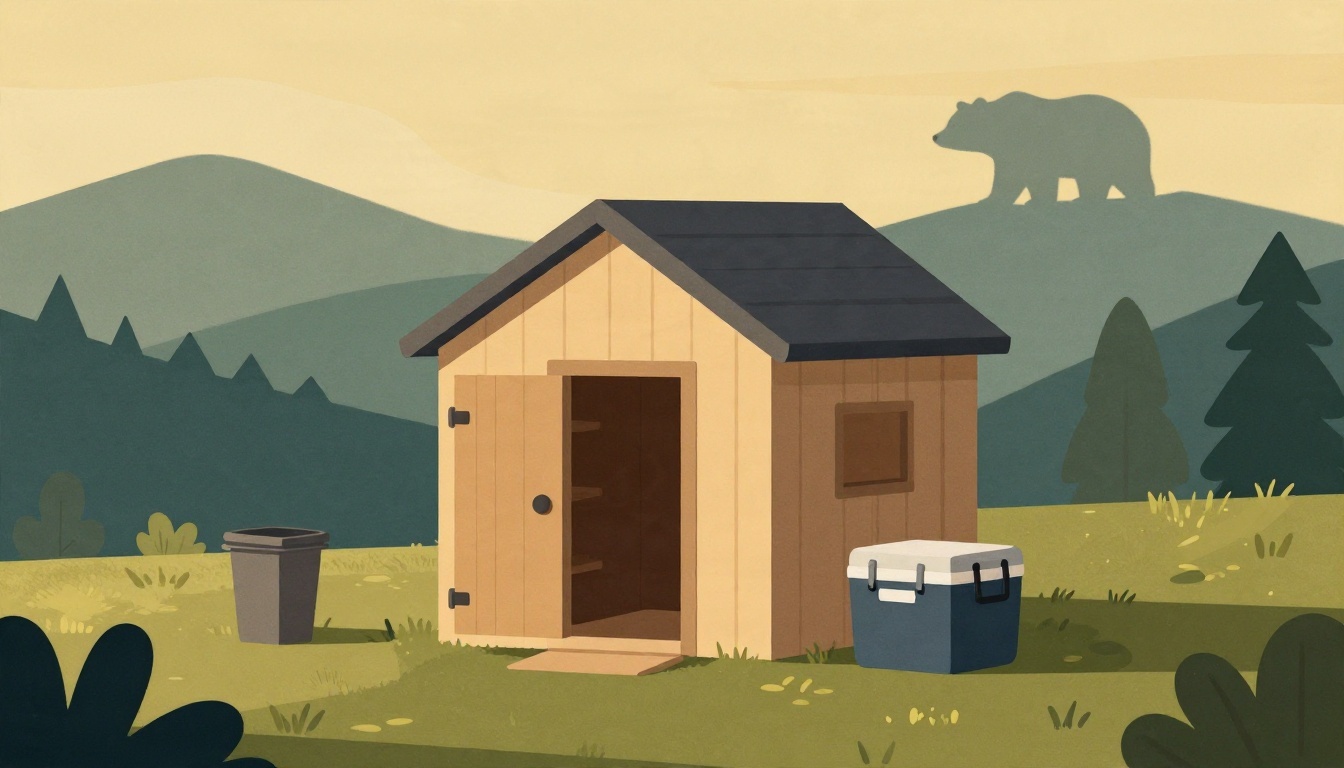
According to the National Park Service, which of these items must be stored properly because bears consider anything with a scent to be food?
Select one answer.
Start with the storage, not the view
When you book a mountain cabin, the photos show you the deck and the fireplace. They rarely show you where your food will actually live for a week. In bear country, that detail matters more than almost anything else, because how you store food and scented items determines whether wildlife gets drawn to the property.
Bears treat anything with a scent as food. The National Park Service lists canned goods, bottles, drinks, soaps, cosmetics, toiletries, trash, ice chests, sunscreen, bug repellent, fuel, and items used for preparing or eating meals as things that must be stored properly. A cabin that makes this easy is a safer cabin. Here is how to evaluate one before you book.
What counts as "food" for a bear
The first step is widening your definition. If it smells, it is food. The Friends of the Bridger-Teton put it plainly: this includes meals and snacks, but also garbage, pet food, sunscreen, lip balm, toothpaste, and cooking oils.
That means your cabin needs storage capacity for more than groceries. Plan for:
- Coolers and perishables
- Dry goods and snacks
- Trash and recycling
- Toiletries, sunscreen, and bug spray
- Pet food and bowls
- Dirty dishes and cookware
A cabin with a full kitchen and a secure place for all of the above will make your trip far simpler.
Questions to ask before you book
Use this checklist when you contact the host or read the listing:
- Is there a lockable, hard-sided storage area? A pantry, mudroom, or garage that closes fully is ideal. Ask whether it is bear-resistant or simply indoors.
- Where does trash go? Confirm there is a secure, lidded bin, and ask when it gets emptied. Trash left out is one of the most common attractants.
- Is the grill cleaned and stored? Greasy grills draw bears. Ask whether the property provides cleaning supplies and a place to store the grill after use.
- Are windows and doors bear-aware? Ask whether the host provides guidance on keeping doors and ground-floor windows closed, especially overnight.
- Is there a written bear-safety policy? A good host will hand you clear rules at check-in rather than leave you guessing.
BearWise's vacation rental guidance emphasizes securing food, garbage, and recycling, and never leaving food unattended. A cabin that supports those habits is doing its job.
Match the cabin to your group's habits
A couple who eats out most nights needs less storage than a family of eight cooking every meal. Be honest about how you will use the kitchen.
- Big group, big cooking: Look for a full pantry, a second fridge or cooler space, and a clearly designated trash area.
- Pet owners: Confirm where pet food and bowls will be stored overnight. Never leave pet food outdoors.
- Families with kids: Ask where snacks and wrappers go. Kids leave food in odd places, so a single "food zone" rule helps.
Set up a food zone on arrival
Once you arrive, spend ten minutes establishing a routine:
- Unpack all food and scented items into the designated storage area immediately.
- Keep coolers closed and latched when not in use.
- Wash dishes right after meals and strain food particles from dishwater.
- Wipe counters and the grill after cooking.
- Take trash out to the secure bin before bed, every night.
- Keep toiletries and sunscreen out of reach of open windows and decks.
The Appalachian Trail Conservancy notes that improperly stored food and trash can lead a bear to become habituated to human food, which is dangerous for people and often fatal for the bear. Your habits at the cabin are part of that chain.
Know the local rules
Food storage regulations vary by land manager and region. The NPS notes that some parks require food lockers or bear-resistant containers, while others allow hanging food. Before you travel, check the rules for the specific area you are visiting and follow any instructions your host provides.
Quick pre-booking checklist
- Lockable indoor storage for food and scented items
- Secure, lidded trash and recycling with a known pickup schedule
- Grill cleaning supplies and a storage plan
- Written bear-safety guidance from the host
- Enough kitchen and pantry space for your group size
- Clear policy on pets and pet food
Choosing a cabin with these features removes the guesswork. You get to focus on the trails and the views instead of worrying about what is sitting on the counter.
How the Featured Expert Can Help
5 Star Lodge is a private Adirondack mountain retreat in North Creek, NY, with 4 bedrooms, a master suite with Jacuzzi, and panoramic mountain views. It caters to families and groups with year-round outdoor adventures including skiing, rafting, and hiking. To plan a group stay, visit stay5starlodge.com.